Hello -Welcome - this is your day!
Translate to your language by selecting from the box~:
When the System Speaks, But Doesn’t Listen: My Experience as an Autistic Twitch User
When I logged into Twitch that day, I expected connection — not conflict.
A streamer I follow had asked for a positive place for tarot advice. I had just the thing: a safe, relevant, non-commercial link to my own site — a place created to be uplifting and supportive. I posted it in the chat, thinking nothing of it.
What came next was a shock.
Shortly afterward, I received an email from Twitch saying my account was permanently suspended for the “severe nature” of a violation: allegedly being a “botted or automated account” posting unsolicited advertisements or spam. None of that was true. I am a real person. I responded to a direct request from the streamer. There was no spam, no automation, no harm.
The Words That Wound
As an autistic person, the harm wasn’t just in the suspension — it was in the language.
The email I received was blunt, absolute, and accusatory. There was no space for human context, no suggestion that this might be a misunderstanding. For those of us who are neurodivergent, being accused — especially falsely — hits hard. It can trigger old wounds of being misunderstood, dismissed, or punished simply for existing differently.
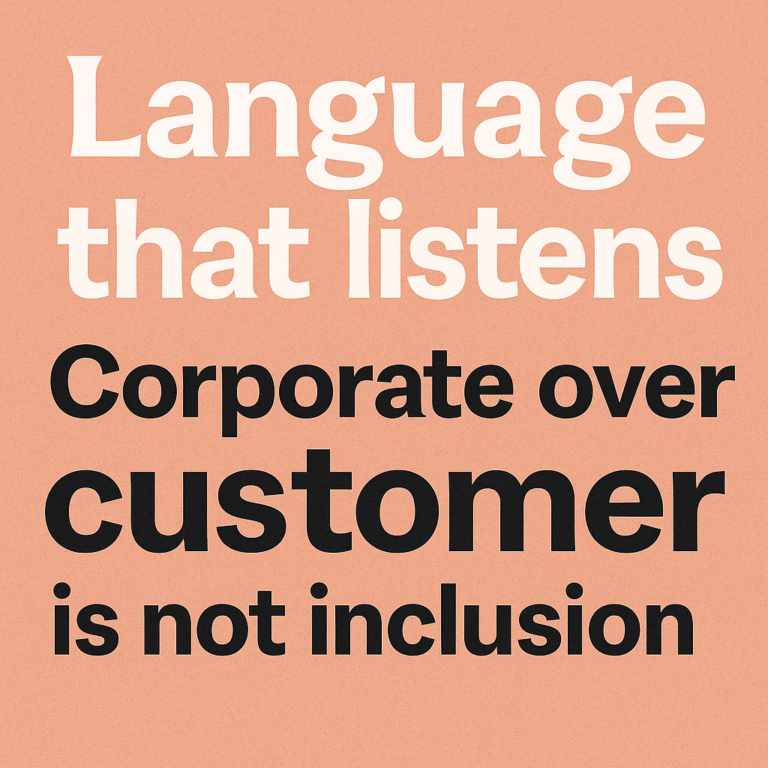
Corporate Over Customer — and the Irony
What made the situation even more absurd is that Twitch accused me of automated behavior while communicating with me entirely through automated responses.
Every message I received from Twitch — including their eventual reinstatement — came in the form of a templated, impersonal reply. No one acknowledged the irony: a human being, falsely accused of being a bot, was judged, processed, and “resolved” by bots.
This is corporate over customer in its purest form: a system that sees violations before it sees people, and clings to its own process even when the facts don’t hold.
The “Partial” Resolution That Isn’t One
After my appeal, Twitch lifted my suspension — but left a permanent strike against me. Their message implied that they still “stand by” the original enforcement, but would let it slide given my circumstances. That framing says: We don’t believe you, but we’ll make an exception.
For a user-powered platform to still slap neurodiverse people for their sensitivities — to treat our reactions as overreactions rather than legitimate responses to harm — is wrong on many levels.
What Needs to Change
This isn’t just about me. It’s about the structural changes needed so that platforms stop harming the very people they claim to include:
Human review where context matters — so misunderstandings like mine don’t escalate into permanent marks against a user.
Accessibility-reviewed enforcement language — neutral, factual, and non-accusatory until the facts are confirmed.
Autism and neurodiversity training for Trust & Safety teams, including those who write the templates.
A culture shift from punishment to problem-solving — where the first goal is understanding, not accusation.
Why I’m Speaking Up
I’m not writing this to get back at Twitch. I’m writing this because every day, autistic and neurodivergent people are misread, misjudged, and mishandled by systems that were never built for us.
Our sensitivities are not a weakness. They are part of how we experience the world. When a platform ignores that — or worse, treats it as an inconvenience — it’s not just bad customer service. It’s discrimination in practice, if not in intent.
The streamer understood. Even though it was never their mistake, they apologized. They saw me as a person. That’s all I wanted from Twitch, too.
Platforms have the power to set the tone for their communities. If they choose language that listens, review processes that respect, and training that prepares their teams to meet us where we are — they’ll not only prevent harm, they’ll create the truly inclusive spaces they claim to value.
Note: Twitch has been invited to share a statement on their approach to accessibility, inclusion, and training for autistic, neurodivergent, and disabled users. If they respond, their statement will be included here.
And yes — I know there are people who will suggest that I, and others who are neurodiverse or sensitive, should just “get over it.” But that reaction is exactly why social platforms must educate their staff — and perhaps their users — about the real impact of language. Comments like that can turn words into weapons, dismissing lived experience and deepening harm.
Inclusion isn’t about telling people to toughen up. It’s about building environments where no one has to.
