Hello everybody!
Translate to your language by selecting from the box~:
Bucket List: Holkham National Nature Reserve, Norfolk, England
Where Sea, Sand and Sky Create Room to Breathe
Destination: Holkham National Nature Reserve
Location: North Norfolk, England
Hosted by: George Wright, Go Cybernaut’s Creative Guide to the United Kingdom
Some destinations impress us with monuments, skylines or carefully arranged attractions. Holkham works differently.
Here, the horizon takes centre stage.
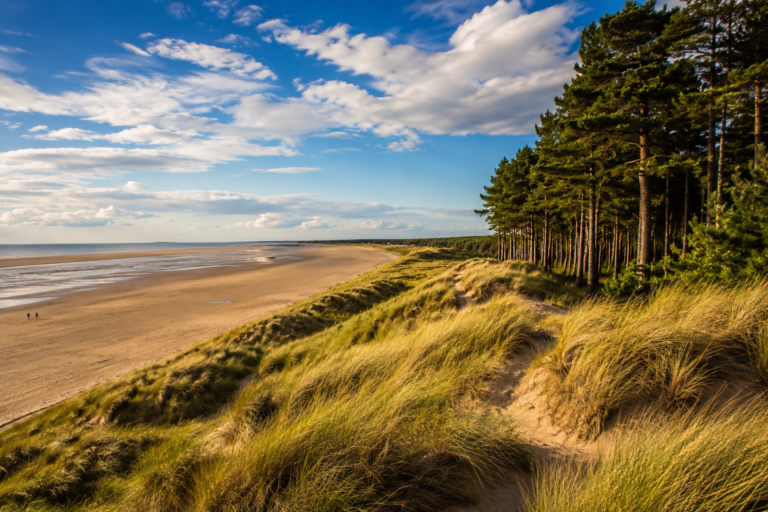
The North Sea meets an immense sweep of sand beneath skies that appear to have discovered extra room. Pinewoods rise behind the beach, salt marshes shimmer between wandering creeks, and seabirds trace temporary messages across the wind.
Holkham National Nature Reserve is not simply somewhere to see. It is somewhere to exhale.
For our next Bucket List journey, George Wright leads us to the north coast of Norfolk, where England loosens its collar, steps away from the crowds and lets the landscape speak.
Welcome to Holkham
Holkham National Nature Reserve protects approximately 10,000 acres of the Norfolk coast between Stiffkey and Burnham Norton. Within its boundaries are tidal sands, salt marshes, dunes, pine woodland and reclaimed freshwater grazing marshes. This unusually rich collection of habitats makes Holkham both a remarkable coastal destination and an important sanctuary for wildlife.
The reserve is managed through a partnership between the Holkham Estate and Natural England. The estate manages much of the land-based habitat, while Natural England manages the foreshore below the mean high-water mark.
Yet Holkham never feels divided into official zones or ecological categories.
Its landscapes flow into one another.
A path through shadowed trees opens onto pale dunes. The dunes fall away toward tidal flats. Beyond them, the beach stretches toward a horizon that seems to move farther away as you approach it.
It is a place shaped by tides, seasons and patience.
“Holkham reminds us that an adventure does not always need noise. Sometimes the greatest journey is finding enough space to hear yourself think again.”
George Wright
Why George Chose Holkham
George has travelled throughout the United Kingdom in search of places that reveal something deeper than their postcard view.
Holkham offers that rare combination of drama and gentleness.
The landscape is undeniably grand, but it does not demand attention. It allows visitors to enter at their own pace, whether they have come for a long coastal walk, a morning of birdwatching, an afternoon with a camera or a quiet seat overlooking the marshes.
For George, Holkham belongs on the Go Cybernaut Bucket List because it represents another side of England.
This is not the England of crowded streets, ceremonial landmarks and ticking itineraries. It is an England of salt air, shifting light, muddy boots and pockets filled with shells.
It is a place where having no particular destination can become the best possible plan.
Holkham Beach: An Ocean of Sand
Holkham Beach is regarded as one of the country’s most natural and unspoilt stretches of sand. At low tide, the distance between the pinewoods and the sea can feel enormous, creating a broad coastal stage of sand, water and sky.
The scale changes how you experience the beach.
People become tiny silhouettes. Footprints form delicate trails before wind and water begin erasing them. Clouds seem closer, shadows travel across the sand and the sea waits at the far edge like a thin blue ribbon.
Behind the shoreline lies a semicircular basin that can fill rapidly during particularly high tides, temporarily transforming part of the landscape into a shallow lagoon.
Holkham is beautiful in bright summer weather, but George suggests resisting the temptation to think of it only as a sunny-day destination.
Under silver clouds, the beach becomes wonderfully atmospheric. In winter, the light can turn pearly and theatrical. During golden hour, the wet sand reflects the sky until the world appears to have two sunsets.
“Do not hurry directly toward the water. Turn around occasionally. At Holkham, the landscape behind you can be every bit as beautiful as the view ahead.”
Through the Holkham Meals
The pinewoods behind the beach are traditionally known as the Holkham Meals. They remain one of the reserve’s most distinctive landscape features and offer a striking transition between the exposed coast and the shelter of the trees.
Inside the woods, the mood changes immediately.
The roar of the wind softens. Fallen needles cushion the pathways. Pine trunks create long vertical shadows while occasional openings provide tantalizing glimpses of the bright sands beyond.
The trees were planted during the late nineteenth century and include Corsican, Scots and maritime pines. Today, they provide habitat, shelter and one of Holkham’s most memorable walking environments.
For visitors who find the enormous openness of the beach a little overwhelming, the pinewoods offer a quieter and more enclosed companion landscape.
One moment you are standing beneath an immense sky. The next, you are walking through a green cathedral scented with resin and sea air.
Dunes Built by Wind
Holkham’s dunes are living structures, continually shaped by storms, wind, vegetation and the movement of sand.
Marram grass helps stabilize parts of the dune system, while more sheltered areas support a surprising variety of plants. Depending on the season, visitors may find sea holly, sea bindweed, bird’s-foot trefoil, marsh helleborine and several species of orchid.
These plants may appear delicate, but they are specialists in survival. They endure salt spray, shifting ground, strong winds and limited freshwater.
Visitors can help protect this fragile landscape by following marked routes, using boardwalks where provided and avoiding fenced conservation areas.
At Holkham, responsible travel is not about standing apart from nature. It is about learning how to enter without leaving unnecessary scars.
The Salt Marshes
The salt marshes are among Holkham’s most quietly captivating environments.
Tidal creeks twist through grasses and mudflats, creating a landscape that changes colour and character throughout the day. Sea lavender and sea aster can bring soft washes of colour during the warmer months, while glasswort and other salt-tolerant plants occupy the lower marsh.
From a distance, the marsh may look calm and easy to cross. It is not.
Tidal creeks can become dangerous as the tide rises, and visitors should remain on established paths unless they have detailed local knowledge.
The wisest way to appreciate the marshes is from the paths, viewpoints and hides provided around the reserve.
Bring binoculars, give yourself time and allow the landscape to reveal its smaller stories.
A Haven for Birds
Holkham is an internationally significant place for birdlife.
The species present vary with migration, breeding cycles and the seasons. Visitors may encounter geese, waders, ducks, raptors and coastal nesting birds across the reserve’s different habitats.
At Gun Hill, shingle areas provide nesting habitat for birds including oystercatchers, ringed plovers and little terns. Because their eggs and chicks are exceptionally well camouflaged, nesting sections may be cordoned off during the breeding season.
The grazing marshes and wetland areas attract another community of birds, while the pinewoods shelter woodland species. Even visitors who do not consider themselves birdwatchers may find themselves pausing as a marsh harrier moves over the reeds or a flock rearranges itself across the evening sky.
This is part of Holkham’s quiet magic.
You arrive planning to look at the landscape, then discover that the landscape is alive in every direction.
Live video of Holkham National Reserve Spoonbills
You do not need to identify every bird to enjoy birdwatching.
Begin with behaviour.
Notice how a bird moves, where it feeds, whether it is alone or part of a flock, and how it responds to the tide. Curiosity can come before expertise.
The Lookout
Situated at the end of Lady Anne’s Drive, The Lookout provides an inviting introduction to the reserve.
Inside, visitors can learn about Holkham’s habitats and wildlife through interpretation displays. Binoculars and bird guides help guests explore the panoramic views, while food and drinks are available to enjoy indoors, outside or as a takeaway.
The building is designed to sit discreetly within its surroundings rather than competing with them.
It is a useful place to begin the day, especially for first-time visitors who would like orientation before setting out. It can also provide a welcome pause after a windswept walk.
George recommends beginning with a warm drink, checking the current reserve guidance and then letting the weather help choose the day’s route.
Holkham is not a place where every hour needs to be prearranged.
Walking the Norfolk Coast
Holkham lies along the Norfolk Coast Path, connecting it to a much larger walking adventure through coastal villages, reserves, beaches and marshland.
The wider National Trail provides more than 100 miles of walking along Norfolk’s coastline, making Holkham an appealing stop for both day walkers and long-distance travellers.
Visitors can create anything from a gentle beach stroll to a longer route linking Holkham with nearby Wells-next-the-Sea.
Possible walking experiences include:
- A return walk through the pinewoods and along the beach
- A coastal walk between Holkham and Wells-next-the-Sea
- Wildlife watching from the reserve’s paths and hides
- A longer section of the Norfolk Coast Path
- A sunrise or late-afternoon photography walk
Conditions can change significantly with weather and tides, so visitors should consult current local information before beginning a longer route.
Jordan Hide and an Ancient Landscape
Jordan Hide overlooks the old marshes of Holkham.
From this viewpoint, visitors can see a raised grassy mound known as Holkham Fort. Its story reaches back toward the Iron Age, accompanied by local traditions involving the Iceni, Romans and later Viking activity.
Whether one visits for history or birds, the hide offers a reminder that Holkham’s landscape has never been empty.
People have moved through this coast for centuries. Settlements have changed, shorelines have shifted and marshes have been reclaimed, yet the relationship between human life and the tides continues.
George sees this as one of the most intriguing dimensions of the reserve.
Holkham may feel timeless, but it is filled with time.
A Perfect Day at Holkham with George
Early Morning: Meet the Wide Sky
Begin near Lady Anne’s Drive while the day is still gathering itself.
Stop at The Lookout for orientation, then walk toward the beach. Morning light can be especially beautiful across the grazing marshes, and earlier hours may offer a quieter atmosphere.
Do not rush to cover distance. Let the transition from marsh to pinewoods, dunes and sand become part of the experience.
Late Morning: Walk the Beach
Follow the shoreline or choose a route across the sands while remaining aware of tides and local guidance.
This is the time for photographs, shell spotting and those long conversations that seem easier when everyone is facing the horizon.
Lunch: Warmth and a Window
Return to The Lookout or choose one of the nearby establishments around Holkham and Wells-next-the-Sea.
A bowl of soup, a sandwich or a proper cup of tea tastes particularly satisfying after several hours in Norfolk wind.
Afternoon: Pinewoods and Wildlife
Explore the woodland paths or visit one of the reserve’s viewpoints.
Bring binoculars when possible, but do not allow equipment to become a barrier. Sit quietly, listen and watch the margins between habitats. These transition zones are often where the most interesting activity occurs.
Evening: Follow the Light Home
Finish with a final walk beneath the pines or along the edge of the beach.
As the sun lowers, textures sharpen, pools reflect the clouds and the landscape takes on a softer palette.
Leave before the light is entirely gone, carrying the salt air home in your coat.
Photography at Holkham
Holkham is a generous destination for photographers because its mood can change from minute to minute.
Subjects to Look For
- Reflections in wet sand
- Wind patterns across the dunes
- Pine trees framing the open beach
- Birds moving above the marshes
- Footprints creating lines through the landscape
- Sea lavender and seasonal dune flowers
- Pools of light beneath changing clouds
- Small human figures emphasizing the beach’s scale
A wide-angle lens suits the expansive landscapes, while a longer lens is helpful for wildlife. A phone camera can also capture beautiful images, particularly when attention is paid to light, reflection and composition.
Wildlife should always be photographed from a respectful distance.
Visiting Through the Seasons
Spring
Spring brings new growth, bird activity and emerging colour among the dunes and marshes. The weather can be changeable, creating a mixture of brilliant sunlight, cool winds and dramatic cloud formations.
Summer
Longer days invite extended walks, beach visits and exploration of the reserve’s varied habitats. This is also an important nesting period, so visitors should observe signs, avoid protected areas and keep dogs under close control.
Autumn
Migrating birds, burnished grasses and softer afternoon light make autumn especially atmospheric. Cooler temperatures can also make longer walks more comfortable.
Winter
Winter reveals Holkham at its wildest.
Large skies, arriving geese and brisk North Sea weather create a stirring coastal experience. Warm waterproof clothing is essential, but those prepared for the elements may discover the reserve at its most hauntingly beautiful.
Responsible Exploration
Holkham is both a beloved visitor destination and a carefully protected home for wildlife.
Visitors can help preserve it by:
- Staying on designated paths where requested
- Respecting fenced nesting areas
- Keeping dogs on a lead or under close control
- Taking litter home
- Avoiding fires and barbecues
- Not disturbing feeding or nesting birds
- Checking tides before walking far across the beach
- Avoiding tidal creeks and marshes without expert local knowledge
The reserve asks visitors to share the landscape rather than claim it.
That small shift in perspective can transform a pleasant walk into a meaningful encounter with nature.
Accessibility and Planning
The reserve contains a mixture of surfaced routes, boardwalks, woodland paths, dunes and deep sand. Conditions vary considerably, and some parts of the beach may be challenging for visitors with limited mobility.
The Lookout provides visitor information and facilities near Lady Anne’s Drive. Current details regarding parking, access, opening times, restrictions and seasonal conditions should be checked through Holkham’s official visitor information before travelling.
Holkham’s enormous scale can also affect walking distances. The sea may be much farther from the entrance at low tide than first-time visitors expect.
Plan generously, wear appropriate footwear and carry water.
Nearby Places to Explore
A visit to the nature reserve can be combined with other North Norfolk destinations.
Holkham Hall and Park
Set within extensive parkland, Holkham Hall is an eighteenth-century Palladian house surrounded by historic landscapes and resident deer.
Wells-next-the-Sea
Nearby Wells-next-the-Sea offers a harbour, colourful beach huts, local shops and places to eat. It also connects with Holkham through coastal walking routes.
The Norfolk Coast Path
Travellers wishing to expand the journey can continue along sections of the National Trail, discovering salt marshes, villages and nature reserves across the county.
What to Bring
George’s day bag for Holkham would include:
- Comfortable walking shoes or boots
- A waterproof outer layer
- An additional warm layer
- Water and a snack
- Binoculars
- A camera or charged phone
- Sun protection
- A small rubbish bag
- Tide and weather information
- Plenty of unhurried time
Norfolk weather has a talent for changing its mind, so layers are more useful than optimism alone.
Why Holkham Belongs on the Bucket List
Bucket List destinations are often imagined as places we must reach before time runs out.
Holkham suggests another interpretation.
Perhaps a Bucket List can also contain places that return time to us.
Time to walk without measuring progress. Time to watch the tide enter a creek. Time to notice the shape of a bird’s wings or the sound of wind moving through pine needles. Time to stand before a great horizon and remember that life contains more space than our immediate worries allow us to see.
Holkham does not need roller coasters, neon signs or a tightly packed itinerary.
Its wonder is written in quieter ink.
For George Wright, this North Norfolk reserve represents the United Kingdom at its most elemental: sea, sand, wind, wildlife and an open invitation to wander.
Come for the beach.
Stay for the stillness.
Carry a little of that spaciousness home.
Discover More
Birding Places – Details and map for your Birding excursions.
Camping – Options to set up camp at the reserve.
Holkham Beach & Nature Reserve – Begin planning your visit.
Visit North Norfolk – Windswept tidelines, a maze of creeks and saltings, miles of dunes and sandspits, shady pinewoods, green pastures and marshes: the mix of habitats and the blend of wildlife make Holkham NNR a unique place, somewhere to catch your breath in a busy world.
Wikipedia – The reserve, according to the Internet encyclopedia.
Lodging – Accommodations to stay at in Holkham.
Explore More
Heritage Treasures Day (UK) – Heritage Treasures Day is marked on January 11 of every year. It’s the perfect day to let everyone know about your unique heritage.
Great Backyard Bird Count – Each February citizen scientists come together to collect data about wild birds from across the globe.
English Tourism Week – VisitEngland is proud to lead the annual English Tourism Week – 13th to 22nd of March. 2026 – celebrating the diverse, exciting, and vibrant sector, and highlighting the quality and value of English tourism.
Discover National Parks Fortnight – Discover National Parks Fortnight is observed in the U.K. for 14 days from April 4—18 each year.
Yorkshire Day – The 1st of August is Yorkshire Day – a day when the whole region shows the world how proud they are to be Yorkshire.
Stratford-upon-Avon belongs to the second kind. It is not only a place on the map. It is a page turned slowly beside a river, a half-timbered doorway leaning into history, a garden path where the past still seems to be deciding whether to whisper or perform.
There are places where the land seems to breathe history. The wide purple moors, stone villages, and windswept hills of North York Moors National Park feel exactly like that kind of place.

George Wright brings charm, culture, and a razor-sharp pen to his role as UK Travel Writer at Go Cybernaut.
With an instinct for blending history, humor, and hidden gems, George paints Britain not just in red, white, and blue—but in vivid stories that stretch from craggy Scottish cliffs to London’s street-art-lined alleys.
George leads with emotional intelligence and literary grace. His work isn’t flashy—it’s felt. He gives space to the mood, the texture, the stillness of place. He writes as if the land itself is whispering, and he’s just translating.
Have you ever visited a mountain, lake, valley, or sacred-feeling landscape that made you move more slowly?
Come wander with us through more Go Cybernaut Bucket List destinations, where every journey is chosen for curiosity, care, wonder, and the possibility of finding a soft place to land.
🌟 Support the Go Cybernaut Constellation
Go Cybernaut is a soft place for curiosity, music, discovery, and storytelling. Every article, playlist, and celebration is created to help people feel a little less alone and a little more inspired.
If something here brightened your day, you can help keep the constellation shining:
☕ Buy Me a Coffee
📚 Visit the Cybernaut Bookstore
🎶 Explore our curated playlists
✉️ Join the weekly newsletter
🛍️ Visit & Shop on Market Street
Every visit, share, and small contribution helps this creative space continue to grow.
Thank you for being part of the journey. 🌿
If this little sanctuary gave you a softer place to land, a new idea to follow, a song to play, a book to consider, a memory to revisit, or a doorway away from doom scrolling, we would be grateful if you shared it with three friends, relatives, or associates who might also enjoy and benefit from being here.
Go Cybernaut is a human-led cultural discovery and celebration publisher, created by Gayle Olson with an AI-supported editorial constellation. Through accessible guides, playlists, stories, and seasonal celebrations, it creates a soft place to land for curious people seeking connection, delight, and discovery.
Inspired by the 2026 Travel 365 Desk Calendar from Papp Publishing.
