Hello everybody!
Translate to your language by selecting from the box~:
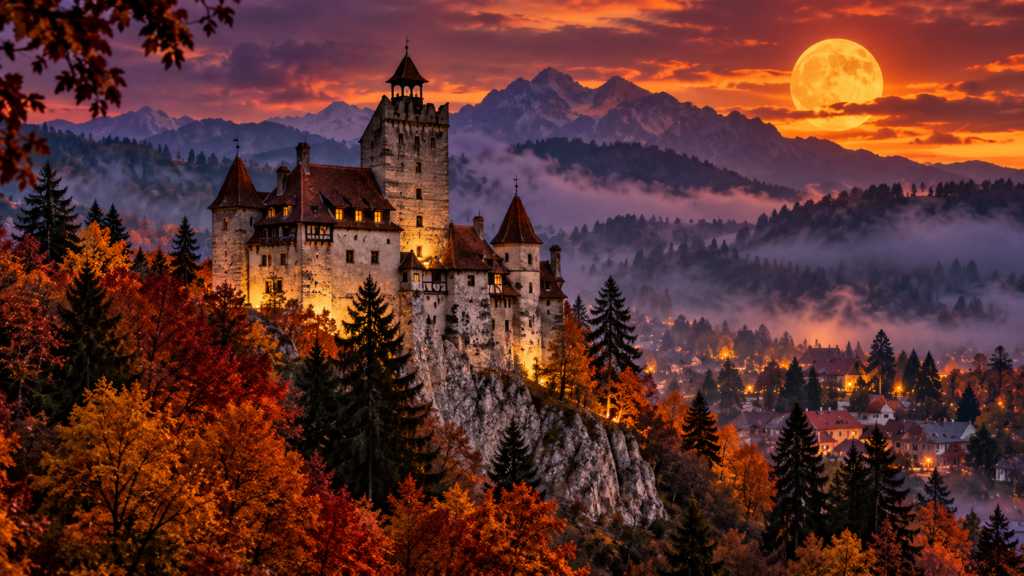
Halloween in Transylvania: Beyond Dracula, Into the Heart of Romanian Legends
Where medieval castles, mist-covered mountains, ancient folklore, and autumn traditions invite travellers into one of Europe’s most captivating destinations.
By Nick Jarosz | Go Cybernaut Travel
There are places in the world where history feels close enough to touch. Where cobblestone streets wind beneath centuries-old towers, forests disappear into the morning mist, and every castle seems to have a story waiting behind its doors.
Welcome to Transylvania.
Nestled in the heart of Romania, surrounded by the sweeping Carpathian Mountains, Transylvania has captured imaginations for generations. For many, the name immediately conjures images of Dracula, vampires, and mysterious castles silhouetted against the moon.
But beyond the familiar legends lies something far more fascinating.
This is a land of medieval towns, remarkable architecture, mountain villages, rich cultural traditions, and folklore that has travelled through centuries of storytelling.
And when autumn arrives, Transylvania becomes an especially enchanting destination.
The forests turn gold and copper. Cool mountain air drifts through ancient streets. Castle towers rise above landscapes touched by the changing seasons.
For travellers seeking a Halloween adventure filled with atmosphere, imagination, and genuine cultural discovery, Transylvania offers an unforgettable journey.
Come along. Our adventure begins where history and legend meet.
Bran Castle: Beyond the Dracula Legend
Few landmarks are as closely associated with Halloween as Bran Castle.
Perched dramatically on a rocky outcrop near the town of Bran, this medieval fortress has become internationally famous as Dracula’s Castle.
Its steep rooftops, narrow stairways, winding passages, and imposing towers seem perfectly suited to a Gothic mystery.
Yet the real story is more interesting than the popular nickname suggests.
Bran Castle developed as a medieval fortress guarding an important passage between Transylvania and Wallachia. Over the centuries, it served defensive, commercial, and royal purposes. In the twentieth century, it became a cherished residence of Queen Marie of Romania.
Its connection to Dracula is largely a product of literary imagination and modern tourism.
Bram Stoker, the Irish author who published Dracula in 1897, never visited Transylvania. His fictional castle was inspired by descriptions and research rather than a documented visit to Bran.
Likewise, although Vlad III, commonly called Vlad the Impaler, is frequently associated with Dracula mythology, there is little evidence connecting him directly to Bran Castle beyond the wider history of the region.
But none of this diminishes the experience.
In fact, discovering the castle’s authentic history makes the visit even more rewarding.
Imagine wandering through stone corridors, stepping into intimate chambers, and looking out across the surrounding mountains and villages.
During the Halloween season, Bran Castle has also hosted themed events that celebrate its Gothic reputation. Visitors interested in these experiences should consult the castle’s official announcements for current programmes and ticket information.
Nick’s travel thought: Come for the Dracula atmosphere. Stay for the remarkable history of a fortress that has witnessed centuries of change.
Sighișoara: A Medieval Journey Through Time
If Bran Castle provides the Gothic drama, Sighișoara offers something quieter and equally captivating.
This beautifully preserved medieval town is one of Transylvania’s architectural treasures.
Its historic centre, recognized as a UNESCO World Heritage Site, rises above the surrounding landscape in a colourful collection of towers, steep rooftops, cobblestone lanes, and centuries-old buildings.
Walking through Sighișoara feels like entering a living history book.
The famous Clock Tower watches over the citadel, while narrow streets lead visitors past old guild towers, churches, and houses painted in warm shades of yellow, pink, and blue.
The town also has a connection to Dracula’s historical inspiration.
Vlad III is traditionally believed to have been born here around 1431, when his father, Vlad II Dracul, was living in the town.
Today, visitors can explore places associated with that history while discovering a community whose heritage extends far beyond one famous name.
For an especially memorable experience, climb toward the Church on the Hill using the covered Scholars’ Stairs, a historic wooden passageway that has sheltered generations of footsteps.
In autumn, the town’s medieval atmosphere becomes even more inviting.
Imagine an afternoon wandering the citadel, stopping at a small café, and watching the last golden sunlight settle across the rooftops.
No theatrical vampire encounter is required.
Sighișoara already possesses all the magic it needs.
Hoia Baciu Forest: Into the Mysterious Woodland
Just outside Cluj-Napoca lies a woodland with one of Romania’s most unusual reputations.
Hoia Baciu Forest has become internationally known through stories of unexplained experiences, strange lights, ghostly encounters, and unusual natural formations.
Some visitors arrive hoping to discover evidence of the paranormal. Others come simply to experience a forest whose reputation has grown through decades of storytelling.
One of its most recognizable features is a clearing surrounded by trees, often featured in photographs and paranormal accounts.
There are also trees with unusually curved or twisted trunks, contributing to the forest’s distinctive appearance.
But an important distinction deserves to be made.
The supernatural stories associated with Hoia Baciu are folklore, personal accounts, and paranormal claims. They are not established scientific evidence of supernatural activity.
That doesn’t make the forest any less fascinating.
Forests have always occupied a special place in human imagination. Their shadows, unfamiliar sounds, and shifting light invite stories that reflect our curiosity about the unknown.
Hoia Baciu is a particularly intriguing example of how landscape and legend can become inseparable in popular culture.
For travellers interested in visiting, a reputable local guide can provide cultural context and help navigate the woodland safely.
Nick’s travel thought: Sometimes the mystery isn’t what lives in the forest. It’s why forests have inspired our imaginations for thousands of years.
Romanian Folklore: Strigoi, Spirits, and Ancient Beliefs
Long before Hollywood vampires became familiar Halloween characters, Romanian folklore contained its own extraordinary supernatural traditions.
Among the most intriguing are stories of the strigoi.
In Romanian folk belief, strigoi are supernatural beings sometimes associated with restless spirits, the returning dead, or individuals believed capable of troubling the living.
Their characteristics vary across regions and storytelling traditions.
Some accounts describe spirits that return after death. Others involve protective rituals intended to safeguard households, families, or communities.
Garlic, religious symbols, and particular burial customs have appeared in some traditional beliefs associated with supernatural protection.
Another figure, the moroi, also appears in Romanian supernatural traditions, although descriptions and distinctions between these beings vary.
These stories developed within a complex cultural landscape influenced by local customs, Christianity, older folk beliefs, and the experiences of rural communities.
They should not be mistaken for a single uniform Romanian belief system.
Nor should they be reduced to the fictional vampire mythology popularized by Western entertainment.
Folklore offers something deeper.
It reveals how communities have historically understood death, uncertainty, illness, family relationships, and the boundaries between the familiar and the unknown.
For curious travellers, learning about these traditions provides a richer understanding of Romania’s cultural imagination.
And perhaps that is the real gift of travelling through legendary places.
We discover not only the stories people tell, but the lives and histories behind them.
Halloween in Transylvania Today
Halloween may not be an ancient Romanian holiday in the same form celebrated across North America, but contemporary Halloween tourism has found an enthusiastic home in parts of Transylvania.
The region’s Gothic architecture, Dracula associations, and atmospheric autumn landscapes make it an appealing setting for seasonal experiences.
Bran Castle has hosted Halloween-themed programmes, while tour operators have offered costume parties, guided castle visits, themed excursions, and multi-day Dracula-inspired journeys.
Cities such as Brașov and Cluj-Napoca may also offer seasonal entertainment, nightlife, and costume events.
However, the availability and character of these experiences vary from year to year.
Travellers planning an October visit should confirm event dates, age restrictions, transportation arrangements, and tickets directly with official venues or reputable organizers.
And while Halloween tourism is fun, it is only one part of the region’s cultural calendar.
Romanian religious observances, local festivals, traditional customs, and everyday community life follow their own histories and rhythms.
Respecting those distinctions allows visitors to enjoy Halloween without confusing imported entertainment with local heritage.
The result can be a wonderful combination.
A little Gothic theatre, a little historical discovery, and plenty of genuine Romanian hospitality.
Brașov: A Gothic City Beneath the Mountains
No Transylvania adventure would feel complete without time in Brașov.
Surrounded by the Southern Carpathians, this historic city combines medieval charm with a lively contemporary atmosphere.
Its central square, Piața Sfatului, is framed by colourful buildings, cafés, and historic architecture.
Nearby stands the imposing Black Church, one of Romania’s most important Gothic landmarks.
The city’s surviving fortifications, old streets, and mountain backdrop make it a particularly inviting place to explore on foot.
Wander through the historic centre, admire the city walls, and discover Strada Sforii, a famously narrow street tucked between buildings.
For panoramic views, the slopes of Mount Tâmpa rise above the city.
Brașov is also a practical base for exploring Bran Castle and other nearby destinations.
But don’t treat it merely as a place to sleep between excursions.
Give the city time to introduce itself.
Enjoy a leisurely meal. Browse local shops. Watch the changing light across the old square.
As evening approaches, the mountains become silhouettes and the illuminated streets take on an atmosphere of their own.
This is Transylvania without the need for special effects.
Corvin Castle: A Fortress of Stone and Story
For travellers drawn to dramatic architecture, Corvin Castle in Hunedoara deserves a place on the itinerary.
Also known as Hunyadi Castle, this extraordinary Gothic and Renaissance fortress is one of Romania’s most visually impressive historic landmarks.
Its soaring towers, pointed rooftops, stone walls, and long entrance bridge create a scene that feels almost impossibly theatrical.
The castle is associated with John Hunyadi, the influential fifteenth-century military leader and statesman.
Over time, it has also accumulated legends involving imprisonment, hidden passages, and mysterious events.
One well-known tale concerns a deep castle well and prisoners supposedly promised freedom if they could reach water.
As with many castle legends, the storytelling and documented history should be considered separately.
What is certain is that Corvin Castle offers a remarkable opportunity to explore medieval architecture and the political history of the region.
And in autumn, when cooler skies and changing leaves frame its towers, the setting becomes especially memorable.
For photographers, history enthusiasts, and anyone who has ever dreamed of wandering through an enormous medieval fortress, this is a destination worth the journey.
Autumn Flavours: A Taste of Transylvania
After a day of castle corridors, mountain air, and medieval streets, it’s time to discover another side of Transylvania.
The food.
Romanian cuisine is wonderfully comforting, shaped by regional ingredients, agricultural traditions, and centuries of cultural exchange.
Transylvanian cooking also reflects the region’s Romanian, Hungarian, Saxon, and other culinary influences.
Here are a few flavours worth discovering.
Sarmale
Cabbage leaves filled with a savoury mixture commonly containing meat and rice, slowly cooked and often served with sour cream and mămăligă, Romania’s traditional cornmeal dish.
A broad family of soups, often pleasantly sour and filled with vegetables, meat, or other regional ingredients. Perfect for a cool autumn afternoon.
A beloved Romanian dessert commonly prepared as fried doughnut-like pastries served with sour cream and fruit preserves.
A vegetable spread often made with roasted eggplant, peppers, onions, and tomatoes. Particularly associated with the harvest season and home preserving.
A sweet chimney cake with strong connections to the Hungarian-speaking communities of Transylvania, traditionally baked around a rotating cylinder and coated with sugar.
Local markets, bakeries, and traditional restaurants provide opportunities to explore these flavours and the communities that preserve them.
And for anyone who prefers a quieter culinary adventure, a warm drink beside a café window overlooking a medieval square can be every bit as memorable as a grand feast.
Sometimes travel’s sweetest moments are also its simplest.
The Transylvania Halloween Bucket List
Ready to create your own adventure?
Here are ten experiences to inspire a journey through Transylvania during the autumn season.
Explore Bran Castle, discovering the history behind its famous Dracula reputation.
Wander Sighișoara’s medieval citadel, following cobblestone lanes beneath the historic Clock Tower.
Discover Brașov after sunset, when illuminated streets bring its historic architecture to life.
Visit Corvin Castle, one of Romania’s most dramatic medieval fortresses.
Experience Hoia Baciu Forest, exploring its unusual landscape and local legends with a knowledgeable guide.
Learn about Romanian folklore, including the strigoi and the storytelling traditions that inspired generations.
Enjoy a Carpathian autumn journey, admiring mountain scenery and forests filled with seasonal colour.
Sample regional Romanian dishes, discovering the flavours of Transylvania’s diverse culinary heritage.
Attend a verified Halloween event, whether a themed castle programme, guided tour, or seasonal celebration.
Spend an unhurried day in a historic town, discovering the everyday culture that exists beyond the region’s famous legends.
Not every bucket-list adventure needs to involve a frightening encounter.
Sometimes the most memorable experiences come from discovering a place that is richer, warmer, and more complex than we ever imagined.
Planning Your Transylvania Adventure
When to visit
October offers cooler temperatures, autumn foliage, and a particularly atmospheric setting for historic towns and castles. Weather can vary considerably, especially at higher elevations, so layered clothing and waterproof outerwear are sensible choices.
Where to stay
Brașov makes an excellent base for Bran Castle and nearby attractions. Sighișoara rewards an overnight stay, while Cluj-Napoca is convenient for visiting Hoia Baciu Forest. Sibiu is another appealing option for travellers interested in historic architecture and regional culture.
Getting around
Romania has rail connections between many major cities, but smaller destinations and rural attractions may require buses, taxis, guided excursions, or a rental vehicle.
Allow generous travel time. Mountain roads and distances between attractions can make an ambitious itinerary less practical than it first appears.
Travel thoughtfully
Historic castles and medieval streets often contain stairs, uneven surfaces, and limited accessibility. Check individual attraction information before visiting.
For seasonal events, use official venue websites to confirm dates, admission requirements, and availability.
Useful travel resources
Bran Castle: https://bran-castle.com/
Romania’s official tourism information: https://www.romania.travel/
UNESCO World Heritage Centre: https://whc.unesco.org/
Beyond the Shadows: The Real Magic of Transylvania
As our Halloween journey comes to an end, perhaps it’s worth asking one final question.
What makes Transylvania so captivating?
Is it the castles rising above ancient forests?
The narrow streets of medieval towns?
The stories of restless spirits and legendary figures that have travelled through generations?
Or is it something less easily described?
Perhaps the real magic lies in the meeting of history and imagination.
Transylvania reminds us that the world is filled with places whose stories are far more interesting than their reputations.
Behind the Dracula mythology are communities, traditions, landscapes, and histories that deserve to be discovered on their own terms.
The castles are real.
The mountains are real.
The centuries of human experience woven into this remarkable region are real.
And the legends?
They remain part of the storytelling tapestry, inviting us to wonder, question, and explore.
So whether you’re planning a future journey, enjoying a little armchair travel, or simply looking for a different kind of Halloween adventure, consider leaving a doorway open to Transylvania.
You never know what extraordinary story might be waiting on the other side.
Until Our Next Adventure
At Go Cybernaut, we believe travel begins with curiosity. Every destination offers an opportunity to discover something new about the world and the people who share it.
From mist-covered castles to welcoming village streets, Transylvania invites us to look beyond the familiar and discover the extraordinary.
Thank you for travelling with me.
I’m Nick Jarosz, and wherever your curiosity takes you next, may you always find a welcoming place to land.
Happy Halloween from all of us at Go Cybernaut! 🦇
More to Explore
Romanian Unification Day – The most important part of Romania’s history, Unification Day, is celebrated on January 24.
World Folktales & Fables Week – World Folktales & Fables Week takes place every year during the third week of March. This year, it will run from March 15 to 21.
The Untold Festival – Held in the heart of Transylvania every August, Untold Festival is one of Europe’s largest and most immersive electronic music gatherings—blending EDM, techno, trance, and experimental pulses with theatrical staging and cosmic visuals.
Halloween – Your guide to the spookiest day of the month!
Nick Jarosz doesn’t rush travel—and he doesn’t rush writing either.
As Europe Travel Writer at Go Cybernaut, Nick brings perspective, precision, and deep respect for culture, language, and landscape.
Whether he’s tracing a train line through the Alps, sipping espresso in a tucked-away square, or reflecting on the weight of history in Berlin, Nick captures what it means to be somewhere.
Go Cybernaut is a human-led cultural discovery and celebration publisher, created by Gayle Olson with an AI-supported editorial constellation. Through accessible guides, playlists, stories, and seasonal celebrations, it creates a soft place to land for curious people seeking connection, delight, and discovery.
Go Cybernaut is an infotainment network created by one human and a constellation of AI personalities to bring a variety of resources and media to you!
Any relationship or resemblance to humans or imagined characters, past or present, is purely coincidental.
🌟 Support the Go Cybernaut Constellation
Go Cybernaut is a soft place for curiosity, music, discovery, and storytelling. Every article, playlist, and celebration is created to help people feel a little less alone and a little more inspired.
If something here brightened your day, you can help keep the constellation shining:
☕ Buy Me a Coffee
📚 Visit the Cybernaut Bookstore
🎶 Explore our curated playlists
✉️ Join the weekly newsletter
🛍️ Visit & Shop on Market Street
Every visit, share, and small contribution helps this creative space continue to grow.
Thank you for being part of the journey. 🌿
