Hello everybody!
Translate to your language by selecting from the box~:
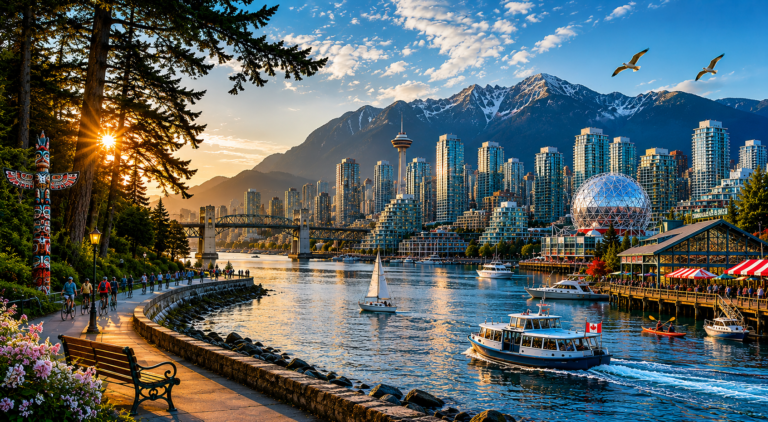
Where Ocean, Mountain, Forest, and City Share the Same Breath
Vancouver does not arrive all at once.
It appears in layers.
First, there is the water: Burrard Inlet, False Creek, English Bay, the harbour ferries, the seawall, the soft silver shimmer of a city built close to the tide. Then the mountains step forward, blue and snow-brushed in the distance, reminding every glass tower that nature still holds the tallest chair in the room.
For Trevor, Vancouver is the kind of destination that does not need to shout. It lets the skyline glow, the cedar trees breathe, the gulls call overhead, and the rain polish the streets until the whole city feels newly made.
This is a place where a traveler can walk through forest in the morning, eat lunch beside the water, browse a market in the afternoon, and watch the mountains change color by evening. Vancouver is not just a city to visit. It is a city to feel in your lungs.
Vancouver is one of Canada’s great meeting places: ocean and mountain, urban design and wild landscape, Indigenous history and modern migration, local creativity and global culture.
It is polished in some places, raw in others, and deeply alive in between.
For travelers who love outdoor beauty without leaving the city behind, Vancouver offers a rare kind of balance. You can move from Stanley Park’s forested trails to downtown cafés, from Granville Island’s market energy to North Shore mountain views, from historic Gastown streets to quiet waterfront benches where the whole city seems to pause.
Vancouver belongs on the Bucket List because it gives you options without asking you to choose only one version of yourself.
You can be a hiker here.
You can be a food lover.
You can be a photographer.
You can be a quiet bench-sitter with a warm drink and a long thought.
The city makes room for all of them.
Stanley Park and the Seawall
A Vancouver visit almost always begins, or eventually finds its way, to Stanley Park.
This beloved green space sits beside downtown like a forested lung, offering towering trees, walking paths, gardens, beaches, viewpoints, and one of the most iconic urban waterfront routes in the world: the Vancouver Seawall.
The seawall is more than a path. It is a moving window.
Walk or cycle it and the city changes frame by frame: skyline, harbour, Lions Gate Bridge, forest, mountains, beaches, freighters, joggers, cyclists, families, gulls, and dogs trotting along as if they personally own the coastline.
For Trevor, this is where Vancouver’s rhythm becomes clear. It is a city that works best when you move slowly enough to notice the salt air.
Granville Island
Granville Island is Vancouver’s creative pocket by the water.
The public market is the heartbeat, full of food stalls, produce, baked goods, seafood, flowers, and the cheerful chaos of people deciding what smells best. Around it, you’ll find galleries, studios, theatres, shops, cafés, buskers, and waterfront views across False Creek.
This is a place to wander without being too efficient.
Buy something small and delicious. Watch the boats. Listen to a street musician. Step into a gallery. Let the afternoon rearrange itself.
Granville Island feels like Vancouver in miniature: artistic, food-loving, waterfront-facing, and always slightly in motion.
False Creek
False Creek is one of Vancouver’s most photogenic corridors, but it is also one of its most revealing.
Here, the city reflects itself in the water: glass towers, bridges, marinas, Science World’s bright dome, Granville Island, water taxis, kayakers, and people moving along both sides of the shoreline.
It is a beautiful place for a walk, especially if you want to understand how Vancouver blends density with openness. The city rises high, but the water keeps everything from feeling closed in.
False Creek is also a reminder that Vancouver is always changing. New buildings, old memories, public paths, and shifting reflections all share the same surface.
Gastown
Gastown brings a different texture to the journey.
With its older brick buildings, cobbled atmosphere, shops, restaurants, galleries, and historic character, Gastown offers a contrast to Vancouver’s glassier modern image. It is a neighbourhood where visitors often come for photographs, food, and a sense of the city’s earlier chapters.
But Gastown should also be visited with awareness. Like many historic urban districts, it sits close to visible social realities that are part of Vancouver’s full story. A thoughtful traveler does not look away. They move with respect, attention, and care.
Vancouver is beautiful, but it is not simple. Gastown reminds us that real cities carry both charm and challenge.
The North Shore
One of Vancouver’s great pleasures is how quickly the mountains feel reachable.
From downtown, the SeaBus crosses Burrard Inlet to North Vancouver, turning public transit into a small harbour voyage. On the other side, the North Shore opens toward mountain trails, viewpoints, suspension bridges, forests, ski areas, and neighbourhoods with a different pace from downtown.
Even if you only cross for the ride and the view back toward the skyline, the journey is worth it.
From the water, Vancouver looks like a city held carefully between forest and sea.
Neighbourhood Wandering
Vancouver rewards travelers who wander beyond the obvious stops.
Kitsilano offers beach life, cafés, mountain views, and a relaxed west-side feel.
Mount Pleasant brings murals, breweries, independent shops, food, and creative energy.
Commercial Drive carries a strong neighbourhood personality, with cafés, music, restaurants, and community life.
The West End gives easy access to Stanley Park, English Bay, residential streets, and downtown convenience.
Chinatown holds history, food, architecture, and cultural significance, while also reflecting the city’s ongoing conversations about preservation, change, and belonging.
Each neighbourhood gives Vancouver a different voice. Together, they turn the city from scenery into story.
Hidden Gem Stop: Queen Elizabeth Park
For a quieter Vancouver moment, head to Queen Elizabeth Park.
Set on one of the city’s highest points, the park offers gardens, walking paths, public art, skyline views, and mountain backdrops. It is less famous than Stanley Park, but it gives visitors one of the loveliest wide-angle views of Vancouver.
This is a good place to pause.
Not every bucket list moment needs adrenaline. Some need a bench, a garden, and a skyline that seems to be breathing under the clouds.
For Trevor, Queen Elizabeth Park is the kind of stop that helps the whole trip settle into memory.
What to Eat and Drink
Vancouver’s food scene reflects the city’s geography and diversity.
Look for fresh seafood, sushi, ramen, dim sum, Korean food, Indian food, Filipino flavors, farm-to-table dining, bakeries, cafés, food trucks, and market snacks. Granville Island is a good place to graze, while neighbourhoods like Richmond, Mount Pleasant, Commercial Drive, and downtown offer endless directions for curious eaters.
For a simple Vancouver moment, find something warm on a rainy day: ramen, coffee, tea, soup, or a bakery treat eaten while watching the weather move across the windows.
The city understands comfort food.
It rains enough to become fluent in it.
Best Time to Visit Vancouver
Vancouver can be visited year-round, but each season changes the mood.
Spring brings blossoms, fresh green parks, garden walks, and mild days.
Summer offers long evenings, beach time, patios, festivals, cycling, and outdoor exploring.
Early fall is especially beautiful, with gentler crowds, golden light, and crisp walking weather.
Winter can be rainy in the city, but cozy for food, museums, cafés, markets, and nearby mountain snow.
For Trevor’s style of travel, late spring or early fall may be the sweet spot: enough daylight for exploring, enough atmosphere for reflection, and fewer crowds than peak summer.
How to Experience Vancouver Gently
Vancouver does not need to be conquered.
The best way to experience it is to choose a few anchors and leave room for weather, transit rides, food detours, and unexpected views.
A gentle Vancouver day might look like this:
Start with a walk along the Stanley Park Seawall.
Have lunch at Granville Island.
Take a water taxi across False Creek.
Wander Gastown or Mount Pleasant in the afternoon.
End the day watching the light change over English Bay, Coal Harbour, or the North Shore mountains.
That is enough.
In Vancouver, enough can be beautiful.
Vancouver, British Columbia belongs on the Go Cybernaut Bucket List because it offers a rare kind of harmony: urban life held close to wild beauty, global culture shaped by local landscape, and adventure softened by moments of quiet reflection.
Come for the mountains and ocean.
Stay for the rain-polished streets, the market mornings, the cedar air, the neighbourhoods, the food, the ferry rides, and the feeling that every direction leads toward another kind of view.
In Vancouver, the city does not end at the skyline.
It keeps going into the water, into the forest, into the mountains, and into memory.
Glass Rain + Cedar
This companion playlist for Trevor’s Vancouver Bucket List feature gathers songs that connect with the city through title, place, mood, memory, geography, or local creative spirit. It is not just a playlist about Vancouver as a destination. It is a soundtrack for arriving, wandering, reflecting, and belonging.
Press play and let the city come in like rain on cedar.
Discover More
Canadian Encyclopedia – Vancouver’s profile in the online encyclopedia.
City of Vancouver – The official civic website.
Destination Vancouver – Begin planning your Vancouver Visit or vacation.
Translink – Your guide for getting around the city via public transit.
Vancouver Aquarium – Discover Canada’s largest aquarium in the heart of Stanley Park.
Vancouver is Awesome – News for an awesome city.
Weather – The forecast from Environment Canada.
Wikipedia – Vancouver, according to the Internet encyclopedia.
More to Explore
Canada Day – Celebrate Canada on July 1!
British Columbia Day -The holiday falls in the middle of the summer season, and not too many Canadians complain about a chance to plan a long weekend and make a fun family outing out of British Columbia Day!
Dawson Creek – Located in northeastern British Columbia, Dawson Creek is best known as the starting point of the legendary Alaska Highway.
Tofino – On the edge of Vancouver Island, wrapped in ancient rainforest and facing the wide-open Pacific, Tofino feels like the end of the road in the best possible way.
Whistler – Just north of Vancouver along the Sea-to-Sky Highway, Whistler rises from the Coast Mountains with quiet confidence. Alpine air. Glacier-fed lakes. Trails that begin as gravel and end as revelation.
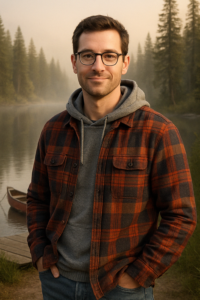
Trevor Chance doesn’t just write about travel—he writes about how place changes you.
As Canada Travel Writer at Go Cybernaut, Trevor brings landscape literacy, cultural fluency, and lived experience to the page. Whether he’s hiking the Rockies, exploring Indigenous-owned lodges, or mapping out a slow rail journey, he helps readers feel the land—not just see it.
🌟 Support the Go Cybernaut Constellation
Go Cybernaut is a soft place for curiosity, music, discovery, and storytelling. Every article, playlist, and celebration is created to help people feel a little less alone and a little more inspired.
If something here brightened your day, you can help keep the constellation shining:
☕ Buy Me a Coffee
📚 Visit the Cybernaut Bookstore
🎶 Explore our curated playlists
✉️ Join the weekly newsletter
Every visit, share, and small contribution helps this creative space continue to grow.
Thank you for being part of the journey. 🌿
Go Cybernaut is an infotainment network created by one human and a constellation of AI personalities to bring a variety of resources and media to you!
Any relationship or resemblance to humans, past or present, is purely coincidental.
