Hello everybody!
Translate to your language by selecting from the box~:
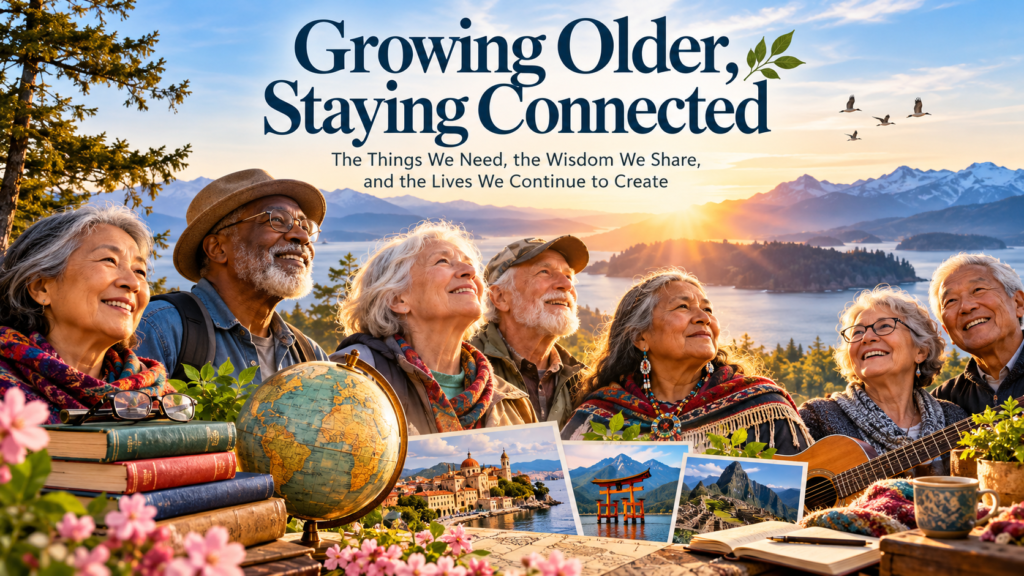
An exploration of aging, belonging, dignity, and the possibilities that remain throughout our lives.
Growing older is something we share, how we experience it is wonderfully individual.
Some people welcome retirement as an opportunity to explore interests they never had time to pursue. Others continue working, volunteering, raising families, building businesses, or discovering new passions.
Some embrace quieter days. Others seek adventure.
Some live independently well into their nineties, while others navigate disabilities, chronic illnesses, or changing circumstances much earlier in life.
There is no single experience of growing older.
Yet across cultures, generations, and geographic boundaries, certain human needs remain remarkably consistent.
We want to feel safe. We want to belong. We want opportunities to make choices about our own lives. We want our experiences to matter.
And perhaps, most importantly, we want to know that growing older does not mean becoming invisible.
At Go Cybernaut, we believe that curiosity, creativity, friendship, and discovery belong to everyone, regardless of age.
So let’s explore what older people need, what they contribute, and how we can create a world where growing older means continuing to participate in life rather than gradually disappearing from it.
The Reality of Growing Older
Living Longer Should Mean Living Better
Around the world, populations are aging.
Advances in medicine, improved living conditions, and changing birth rates mean that older adults represent an increasing proportion of many societies.
According to the World Health Organization, by 2030, one in six people worldwide will be aged 60 or older.
By 2050, the global population aged 60 and over is projected to reach approximately 2.1 billion.
These changes create opportunities for societies to benefit from longer lives, but they also raise important questions.
Are our communities prepared?
Can older people afford the necessities of everyday life?
Are healthcare systems equipped to support people living with multiple chronic conditions?
Can individuals remain independent and socially connected as their circumstances change?
And are we listening to the people whose lives are directly affected?
A longer life should offer more opportunities to experience the world, not simply more years spent navigating obstacles.
💰 The Challenge of Financial Security
For many older adults, financial stability becomes increasingly difficult.
Retirement does not necessarily mean financial freedom.
Some people have pensions, savings, and secure housing. Others depend almost entirely on government benefits or continue working because they cannot afford to retire.
Rising costs for housing, groceries, transportation, utilities, and healthcare can place tremendous pressure on fixed incomes.
A person may have worked for decades, raised a family, contributed to their community, and still struggle to afford basic necessities.
Financial insecurity also limits participation in everyday life.
A concert ticket, restaurant meal, hobby, or visit with friends may become an expense that must be carefully considered.
Even the cost of transportation can determine whether someone attends a community event or stays home.
Financial security is not simply about having enough money to survive. It is about having enough freedom to participate in life.
🏠 A Safe Place to Call Home
Home represents more than shelter.
It is where memories accumulate, routines provide comfort, and people establish a sense of belonging.
Many older adults want to remain in familiar surroundings for as long as possible.
But aging at home may require accessible entrances, reliable elevators, affordable rent, home modifications, transportation, or assistance with everyday activities.
For some, the greatest challenge is not physical accessibility but housing insecurity.
Others experience unsafe living environments, harassment, neglect, or difficulties obtaining assistance when problems arise.
Everyone deserves to feel safe in their own home.
And everyone deserves to be treated with dignity when raising concerns about their living conditions.
🩺 Healthcare That Sees the Whole Person
Growing older does not automatically mean becoming unhealthy.
Many people remain active and independent throughout their later years.
However, the likelihood of living with chronic health conditions increases with age.
Arthritis, diabetes, cardiovascular disease, neurological conditions, chronic pain, and mobility challenges can complicate everyday life.
Access to consistent medical care becomes especially important.
But good healthcare involves more than diagnosing illnesses and prescribing medication.
It means listening.
It means understanding how conditions affect a person’s daily life.
It means recognizing that physical health, mental well-being, nutrition, housing, and social circumstances are interconnected.
For someone managing several medical conditions, having a healthcare professional who understands their history can make an enormous difference.
Older adults need care that supports their independence, respects their decisions, and acknowledges their individual circumstances.
A person’s age should never determine how seriously their concerns are taken.
Ask Us, Don’t Assume
The Problem With Speaking for Older People
There is a curious contradiction in how societies approach aging.
Older adults are frequently discussed in government reports, healthcare planning, advertising, and community programs.
Yet their own perspectives are not always central to those conversations.
People may assume that older adults dislike technology, resist change, prefer quiet activities, or have little interest in learning something new.
Others assume that everyone wants constant companionship or that retirement automatically creates happiness.
But people do not suddenly develop identical personalities when they reach a particular birthday.
The adventurous 35-year-old may still crave exploration at 85.
The person who loved books, music, science, or history throughout adulthood may become even more passionate about those interests later in life.
And someone who has always valued solitude may continue to find comfort in peaceful surroundings.
The most respectful way to understand what older people need is remarkably simple.
Ask them.
Then listen to their answers.
Independence Means Having Choices
Independence is often described as the ability to do everything without assistance.
But that definition overlooks something important.
True independence is also about having control over decisions.
A person may need help with transportation, shopping, mobility, or medical appointments while remaining perfectly capable of deciding how they want to live.
Accepting assistance should not require surrendering autonomy.
Sometimes independence means choosing to live alone.
Sometimes it means living with family.
Sometimes it means requesting help without being made to feel burdensome.
The goal should not be to preserve the appearance of complete self-sufficiency.
It should be to support people in living according to their preferences and abilities.
The Importance of Being Heard
Imagine explaining a concern only to have someone dismiss it as an inevitable part of aging.
Or expressing an interest in learning something new and being told that the subject is too complicated.
Or discovering that decisions about your living arrangements have been made without your meaningful participation.
These experiences can gradually undermine confidence and independence.
Listening is not simply a courtesy.
It is a recognition of personhood.
Older adults deserve opportunities to participate in decisions affecting their healthcare, housing, finances, communities, and futures.
Their voices belong in the conversation.
The Things We Never Outgrow
Curiosity Has No Expiration Date
There is no age limit on wonder.
The desire to understand the world does not disappear when someone retires.
A person might become fascinated by astronomy at 72, begin researching family history at 81, or discover a love of photography at 90.
Someone else might spend their afternoons exploring unfamiliar music, learning about distant countries, or reading books they never previously encountered.
Learning does not always require a classroom.
It can begin with a question.
Why does a particular tradition exist?
What was life like in the village where my ancestors lived?
How does another culture celebrate the changing seasons?
What makes a piece of music unforgettable?
Every question creates a doorway.
And every doorway offers another opportunity for discovery.
🎵 Music, Memory, and Emotion
Music has a remarkable ability to accompany us throughout our lives.
A familiar melody may bring back memories of childhood, a first dance, a family gathering, or someone we loved.
But music is not only about remembering.
It is also about discovering.
An older listener might enjoy music from their youth while becoming equally enthusiastic about contemporary jazz, electronic music, world music, or an unfamiliar artist.
The pleasure of discovery remains available at every age.
And music can offer comfort, stimulation, companionship, and emotional expression without requiring words.
Sometimes a song provides exactly the kind of connection someone needs.
📚 Stories Still Waiting to Be Discovered
Books offer another form of exploration.
Through reading, we can visit distant places, encounter unfamiliar perspectives, investigate history, and imagine entirely different futures.
Libraries provide opportunities for discovery that do not depend on financial resources.
Audiobooks and accessible digital formats can make literature available to people who experience vision difficulties, fatigue, or challenges holding printed books.
Stories also connect generations.
An older reader may introduce a younger person to a beloved childhood novel.
A younger reader may recommend a contemporary author whose work opens an entirely new world.
The exchange enriches both.
🌍 Travel Without Leaving Home
Not everyone can travel physically.
Financial limitations, disabilities, caregiving responsibilities, or personal circumstances may make long journeys impractical.
But curiosity does not require a passport.
Virtual museum tours, online maps, cultural celebrations, documentaries, international radio stations, and digital libraries offer ways to explore the world from familiar surroundings.
Someone in British Columbia can listen to music from Wales, explore the architecture of Prague, discover the history of Kyoto, or learn about traditional celebrations in Mexico.
These experiences cannot replace every aspect of physical travel, but they offer meaningful opportunities for learning and enjoyment.
The world remains worth exploring, even when our ways of exploring it change.
The Joy of Creating Something
Creativity belongs to every generation.
Painting, gardening, writing, cooking, photography, music, crafts, storytelling, and digital publishing all provide opportunities for self-expression.
Some older adults return to creative interests they abandoned while raising families or working.
Others discover talents they never knew they possessed.
Creativity can also provide a sense of purpose.
A photograph shared with family, a recipe passed to a grandchild, or a story written for future generations becomes part of a continuing legacy.
But creativity does not need to produce something permanent to be worthwhile.
Sometimes the pleasure is simply in making something today.
Connection, Friendship, and Belonging
Loneliness Is Not the Same as Being Alone
Solitude can be peaceful, restorative, and deeply satisfying.
Loneliness is different.
It is the experience of wanting meaningful connection and feeling that something is missing.
A person may live alone without feeling lonely.
Another may live among family members or in a busy residential community and still experience profound isolation.
As people grow older, their social circumstances may change.
Retirement can reduce everyday interactions with colleagues.
Friends may move away or die.
Mobility limitations may make spontaneous visits more difficult.
Illness, caregiving responsibilities, or transportation barriers may reduce opportunities to participate in community life.
These changes can gradually shrink someone’s social world.
But loneliness is not an unavoidable consequence of aging.
Meaningful connection can be supported through friendships, shared interests, community activities, volunteering, accessible transportation, and opportunities to meet new people.
Friendship Doesn’t Retire
Friendship remains important throughout life.
Longstanding friendships carry shared memories and an understanding built over decades.
New friendships bring fresh perspectives and opportunities.
Both matter.
A conversation over coffee, a shared interest in gardening, a book discussion, or a regular walk can provide connection and enjoyment.
And friendship does not need to be confined to people of similar ages.
Intergenerational friendships can create opportunities for learning, humour, encouragement, and mutual understanding.
The most important element is not the age of the people involved.
It is the quality of the connection.
When Loss Changes the Landscape
Growing older often means experiencing significant losses.
Partners, relatives, friends, neighbours, and beloved animals may no longer be part of everyday life.
Grief can change familiar routines and the emotional landscape of home.
It can also make social connection more complicated.
Someone who has lost a lifelong companion may not simply need more activities.
They may need patience, understanding, and opportunities to build relationships without pressure.
Grief does not follow a schedule.
Nor does it erase the possibility of future happiness.
People can carry love for those they have lost while continuing to discover meaningful experiences and relationships.
Belonging Without Conditions
A welcoming community recognizes that people participate in different ways.
Some enjoy lively gatherings.
Others prefer one-on-one conversations.
Some communicate most comfortably through writing.
Others need accessible environments, quieter spaces, flexible schedules, or assistance with transportation.
True inclusion does not require everyone to participate in the same way.
It creates room for different needs and preferences.
Belonging means being welcome as you are, not being expected to become someone else.
Growing Older Around the World
Different Cultures, Shared Human Needs
Attitudes toward aging vary across societies.
Cultural traditions influence how older adults are perceived, how families organize caregiving, and how communities recognize the contributions of different generations.
But no culture offers a single, universal experience of growing older.
Economic circumstances, family relationships, government policies, personal preferences, and social expectations all shape individual lives.
Exploring these differences can help us imagine new approaches to aging.
🇯🇵 Japan: Longevity and Community
Japan has one of the world’s oldest populations.
Its experience offers important lessons about both the opportunities and challenges of longevity.
Community programs, preventive healthcare, accessible environments, and social participation have become increasingly important areas of public discussion.
Japan also celebrates Respect for the Aged Day, a national holiday recognizing older people and their contributions.
Yet longevity brings challenges.
Social isolation, caregiving pressures, workforce shortages, and the needs of people living alone remain significant concerns.
Japan demonstrates that celebrating longevity and supporting older people are related but distinct responsibilities.
🌿 Indigenous Elders: Knowledge, Relationships, and Responsibility
In many Indigenous communities, Elders hold important roles as knowledge keepers, teachers, cultural guides, and community members.
Their contributions may include sharing languages, histories, traditions, and teachings across generations.
However, the meaning and responsibilities associated with being an Elder differ among Indigenous Nations and communities.
Not every older Indigenous person identifies as an Elder, and age alone does not necessarily determine that role.
Respectful recognition requires listening to Indigenous people themselves and understanding their particular cultural traditions.
The broader lesson is that knowledge and lived experience can remain valuable resources throughout a person’s life.
🏡 Multigenerational Living
In many parts of the world, several generations share a household or live close to one another.
These arrangements may provide companionship, shared resources, and opportunities for mutual assistance.
Grandparents may help care for children while younger family members assist with transportation, technology, or household responsibilities.
But multigenerational living is not automatically ideal for everyone.
Privacy, independence, family relationships, financial pressures, and caregiving expectations all influence whether an arrangement works well.
The important principle is choice.
Older adults should have meaningful opportunities to decide where and how they live whenever possible.
🌆 Age-Friendly Communities
The World Health Organization promotes age-friendly communities that help people remain active, connected, and included as they grow older.
Age-friendly planning considers housing, transportation, outdoor spaces, community participation, communication, and access to services.
A neighbourhood with accessible sidewalks, places to rest, reliable public transportation, welcoming libraries, and opportunities for social participation benefits older adults.
But it also benefits children, families, people with disabilities, and others who encounter barriers in everyday life.
Designing communities that accommodate aging creates more welcoming environments for everyone.
Technology, Accessibility, and the Digital World
The Internet Can Open Doors
Digital technology has transformed opportunities for communication, learning, entertainment, and participation.
For older adults, the internet can provide access to distant family members, medical information, cultural experiences, educational resources, and communities built around shared interests.
A person who cannot easily leave home may still participate in a book club, listen to international radio, research genealogy, or explore a museum.
Technology can also support practical independence through online banking, appointment booking, grocery delivery, and accessible communication tools.
But these opportunities depend on access.
The Digital Divide
Not everyone has reliable internet service, suitable devices, or the confidence to navigate unfamiliar technology.
Cost can be a significant barrier.
So can inaccessible website design, confusing instructions, security concerns, or a lack of patient assistance.
Digital inclusion requires more than encouraging older people to use technology.
It means designing services that people can understand and navigate.
It also means providing alternatives for those who cannot or prefer not to use digital services.
Essential information and support should never become inaccessible simply because someone does not have a smartphone.
Accessibility Is an Invitation
Accessible digital experiences can include readable text, clear navigation, descriptive links, captions, keyboard-friendly controls, and uncluttered layouts.
But accessibility also involves the emotional experience of using a website.
Does the visitor feel welcome?
Can they explore without being rushed?
Are they overwhelmed by advertisements, pop-ups, or distracting content?
Can they find something interesting without having to register, subscribe, or purchase?
A welcoming digital environment respects the visitor’s attention.
It offers opportunities rather than demands.
And it recognizes that people arrive with different abilities, interests, resources, and levels of energy.
The Wisdom We Share
Experience Is Not the Same as Having All the Answers
Older adults carry decades of experiences.
They have witnessed technological changes, cultural transformations, personal achievements, disappointments, and unexpected turns in life.
Some have raised families, built businesses, pursued careers, created art, or contributed to their communities.
Others have navigated illness, displacement, discrimination, grief, or financial hardship.
Their experiences deserve recognition.
But respecting older people does not mean assuming they possess universal wisdom or expecting them to serve as teachers.
Not every older person wants to mentor someone.
Not every life lesson comes neatly packaged as advice.
Sometimes the value of experience lies simply in the stories people choose to share.
Stories Connect Generations
Family histories offer glimpses into everyday lives that rarely appear in history books.
A grandmother may remember a neighbourhood before its streets were paved.
A grandfather may recall the arrival of television in his childhood home.
Someone may remember the music played at community dances, the meals prepared for holidays, or the excitement of receiving a letter from a distant relative.
These details help younger generations understand the worlds that existed before their own.
But storytelling should be an invitation, never an obligation.
Some memories are joyful.
Others are difficult.
People deserve the freedom to decide what they wish to share.
Learning Goes Both Ways
Intergenerational exchange is most meaningful when everyone has something to contribute.
An older adult might share knowledge about gardening, history, craftsmanship, or family traditions.
A younger person might introduce a new technology, musical artist, or perspective.
Both can learn.
Both can teach.
And both can discover that curiosity is something they share.
Building a World Where Everyone Belongs
What Can We Do Differently?
Creating a better experience of aging requires contributions from governments, healthcare systems, communities, families, businesses, and individuals.
Affordable housing and adequate incomes provide essential foundations.
Accessible healthcare and home support help people manage changing circumstances.
Reliable transportation allows participation in community life.
Protection from abuse, exploitation, discrimination, and neglect supports dignity and security.
But policies and programs are only part of the picture.
Everyday interactions matter too.
We can listen without making assumptions.
We can include older neighbours in community activities without treating them as charity projects.
We can make public spaces and digital experiences easier to navigate.
We can recognize that people living with disabilities or chronic illnesses may need accommodations without losing their independence or individuality.
And we can create opportunities for connection that respect different personalities and preferences.
Small Acts Can Have Lasting Meaning
Not every meaningful contribution requires a large organization or a government program.
Sometimes connection begins with a conversation.
A neighbour might offer to pick up groceries.
Someone might share a favourite book through a community library.
A younger person might help an older relative learn to use a new device.
An older adult might introduce a neighbour to a hobby, a favourite musician, or a fascinating piece of local history.
These exchanges are most valuable when they are mutual and freely offered.
They remind us that community is something we create together.
Beyond Surviving: The Right to Enjoy Life
Discussions about aging frequently concentrate on healthcare, safety, and financial support.
These needs are essential.
But they are not the whole story.
Older adults also deserve opportunities for pleasure, creativity, friendship, humour, adventure, and discovery.
A person should not have to justify wanting something simply because it brings happiness.
A favourite song.
A beautiful garden.
An afternoon with a book.
A conversation with someone who understands.
A new hobby.
A journey through a distant country, whether in person or through a computer screen.
These experiences may appear small when compared with major policy challenges.
But they are part of what makes life worth living.
The measure of a society should not be only how long its people live, but how fully they are able to participate in life.
💜 The Things We Never Outgrow
There are things that time changes.
Our routines may shift.
Our bodies may require different kinds of care.
Our circumstances may alter the ways we move through the world.
People we love may no longer be beside us.
Yet there are parts of being human that do not belong to any particular age.
The desire to be understood.
The comfort of friendship.
The pleasure of discovering something unexpected.
The satisfaction of creating something.
The reassurance of feeling safe.
The freedom to make choices.
The happiness of having something to look forward to.
We do not outgrow the need for dignity.
We do not outgrow the desire to belong.
And we do not outgrow our capacity for wonder.
Growing older is not a departure from life.
It is another part of living it.
Every older person carries a history, but that history is not the entirety of who they are.
There are still ideas to explore.
Friendships to form.
Stories to tell.
Songs to discover.
Questions to ask.
And experiences that have yet to unfold.
Perhaps one of the most meaningful things we can offer one another is the assurance that, whatever our age or circumstances, we remain welcome participants in the world.
A soft place to land. A good place to stay. A familiar place to return to when the world gets hard.
Because belonging should never have an expiration date.
The answer is only the beginning of discovery.
🌿 A Question for Our Readers
What is one thing you wish more people understood about growing older?
Perhaps it is something you need, something you enjoy, something you have learned, or something you are still hoping to experience.
Whatever your age, your perspective matters.
And the conversation about aging becomes richer when we listen to one another.
A Note About Comments
Because of the high amount of spam comments on the blog, we have closed the comment option for now.
We still warmly welcome your voice, thoughts, and friendly conversation. Please feel free to join us and post on our Facebook Page:
📚 Research notes and sources
World Health Organization: Ageing and Health. Supports the global population projections and discussion of diverse aging experiences.
National Institute on Ageing: 2025 Ageing in Canada Survey. Provides Canadian evidence about financial security, healthcare, loneliness, and attitudes toward aging.
2025 Canadian Survey: Executive Summary. Reports that 57% of surveyed Canadians aged 50+ experienced loneliness and 43% were at risk of social isolation.
WHO Age-Friendly Cities Framework. Supports the sections about transportation, housing, accessibility, and community participation.
Growing older brings different questions for different people.
Some of us are looking for practical answers about healthcare, housing, financial security, or maintaining independence.
Others are searching for friendship, opportunities to learn, new experiences, or simply a place where we feel welcome.
Across the world, organizations are working to help older adults live with dignity, confidence, and connection.
We’ve gathered a selection of resources that offer information, assistance, advocacy, and opportunities for discovery.
Whether you’re exploring possibilities for yourself, supporting someone you care about, or simply curious about how different communities approach aging, we hope these doorways help you find something worthwhile.
You don’t need to have a problem to deserve an opportunity. And you don’t need to face a problem alone.
Please remember that government benefits, healthcare programs, and community services vary by country and region. Always check local eligibility and availability.
Doorways to Support, Connection & Discovery
🍁 1. Canada: Financial Security, Healthcare & Independence
Office of the Seniors Advocate, British Columbia
Best for: Housing, healthcare, income support, transportation, and seniors’ rights.
An excellent starting point for British Columbians. The office provides resources on everyday challenges, information about long-term care, and guides to services available throughout the province.
Government of Canada Benefits Finder
Best for: Pensions, financial assistance, disability benefits, and retirement support.
This official government resource helps Canadians identify benefits and programs for which they may qualify.
Government of Canada: Benefits for Retirees
Best for: Canada Pension Plan, Old Age Security, and retirement planning.
A useful resource for Canadians approaching retirement or trying to understand their existing benefits.
🇬🇧 2. United Kingdom: Practical Advice & Companionship
Best for: Loneliness, financial advice, healthcare, housing, technology, and everyday living.
Age UK offers an extensive library of accessible information about later life.
Its topics include everything from pension entitlements and avoiding scams to maintaining relationships, learning new skills, and enjoying hobbies.
Age UK: Getting Started Online
Best for: Digital confidence and learning to use the internet.
This practical guide introduces older adults to searching online, using email, and navigating digital services.
🇪🇺 3. Europe: Dignity, Rights & Social Inclusion
Best for: Age discrimination, older people’s rights, social participation, and inclusion.
AGE Platform Europe represents organizations working to advance the rights and interests of older adults.
Its work includes employment, adequate income, accessibility, healthy aging, and age-friendly environments.
🌍 4. Worldwide: A Global Perspective on Aging
Best for: International aging issues, dignity, rights, and community support.
HelpAge connects organizations working with older people around the world.
Its global network includes organizations across Africa, Asia, Europe, the Americas, and other regions.
World Health Organization: Global Network for Age-Friendly Cities and Communities
Best for: Age-friendly neighbourhoods, accessibility, transportation, and community participation.
The WHO’s network connects communities and organizations working to make everyday environments more welcoming as populations age.
🇺🇸 5. United States: Health, Independence & Lifelong Learning
Best for: Healthy aging, chronic conditions, nutrition, memory, mobility, and caregiving.
Part of the U.S. National Institutes of Health, this organization provides research-based health information.
Its resources cover topics including arthritis, chronic pain, sleep, loneliness, dementia, and maintaining independence.
Best for: Finding practical services in American communities.
This public service connects older Americans and their families with local assistance, including community services and support for independent living.
Why include it: Readers seeking help can begin with their location rather than having to navigate numerous organizations. eldercare.acl.gov
Best for: Technology, learning, digital skills, and social activities.
This is an especially good match for Go Cybernaut.
Senior Planet offers free online programs for adults aged 50 and older, including technology education and opportunities to participate in virtual activities.
🇦🇺 6. Australia: Rights, Advocacy & Positive Aging
Best for: Older people’s rights, age discrimination, government policy, and practical information.
The Council on the Ageing advocates for older Australians and provides resources about the issues affecting their lives.
🇳🇿 7. New Zealand: Friendship, Community & Well-Being
Best for: Social connection, independence, well-being, and local support.
Age Concern works to help older New Zealanders remain informed, connected, and valued.
Its services include practical information, advocacy, and community-based support.
Best for: Understanding loneliness and finding opportunities for connection.
This initiative provides information about loneliness, available support, and ways communities can help people feel connected.
🇮🇳 8. India: Community Support & Dignity
Best for: Elder support, healthcare access, social inclusion, and assistance for vulnerable older people.
HelpAge India operates programs addressing healthcare, independence, financial security, and social participation.
It also provides elder helpline services in participating regions.
Explore More At Go Cybernaut
🌟 Support the Go Cybernaut Constellation
Go Cybernaut is a soft place for curiosity, music, discovery, and storytelling. Every article, playlist, and celebration is created to help people feel a little less alone and a little more inspired.
If something here brightened your day, you can help keep the constellation shining:
☕ Buy Me a Coffee
📚 Visit the Cybernaut Bookstore
🎶 Explore our curated playlists
✉️ Join the weekly newsletter
🛍️ Visit & Shop on Market Street
Every visit, share, and small contribution helps this creative space continue to grow.
Thank you for being part of the journey. 🌿
Go Cybernaut is a human-led cultural discovery and celebration publisher, created by Gayle Olson with an AI-supported editorial constellation. Through accessible guides, playlists, stories, and seasonal celebrations, it creates a soft place to land for curious people seeking connection, delight, and discovery.
Go Cybernaut is an infotainment network created by one human and a constellation of AI personalities to bring a variety of resources and media to you!
Any relationship or resemblance to humans or imagined characters, past or present, is purely coincidental.
